Tuesday, February 17, 2009

World never drink Milkpowder...........ACNE vs Milkpowder ?


It is a crime against humanity to decide that young generation of Sri Lanaka shall stumble and die early deaths so that those in power may eat and work as they wish. No matter what anyone argues, NGO feeding unsuspecting children the corpses of once living beings and promoting milkpowder–complete with its melamine, pus, and hormones–stolen from confined, drugged, and tortured cloned creatures as normal and healthy beyond infancy is a physically, socially, mentally, spiritually, and ecologically damaging, unnecessary crime against humanity.

Last year, the Harvard School of Public Health in USA
produced this study:


JOURNAL: Journal of the American Academy of Dermatology
CITATION: Volume 58, Issue 5, Pages 787-793 (May 2008)
TITLE: Milk consumption and acne in teenaged boys
AUTHORS: Clement A. Adebamowo, Walter C. Willett
OBJECTIVE: "We sought to examine the association between
dietary dairy intake and teenaged acne among boys."

NUMBER OF SUBJECTS: 4273 boys

RESEARCHER'S AFFILIATIONS:

Department of Biostatistics, Harvard School of Public Health
Department of Epidemiology, Harvard School of Public Health,
Department of Medicine, Brigham and Women's Hospital
Harvard Medical School, Boston
Dartmouth Medical School, Hanover

CONCLUSION:

"We found a positive association between intake of
skim milk and acne. This finding suggests that skim
milk contains hormonal constituents, or factors that
influence endogenous hormones, in sufficient quantities
to have biological effects in consumers."


This study confirms what scientific researchers
have previously determined.

Acne occurs when steroids (androgens) stimulate the
sebaceous glands within the skin's hair follicles.
These glands then secrete an oily substance called
sebum. When sebum, bacteria and dead skin cells
build up on skin, pores become blocked, creating
a zit.

"As pointed out by Dr. Jerome Fisher, 'About 80
percent of cows that are giving milk are pregnant
and are throwing off hormones continuously.

'
Progesterone breaks down into androgens, which
have been implicated as a factor in the development
of acne...Dr. Fisher observed that his teenage
acne patients improved as soon as the milk drinking
stopped."

Don't Drink Your Milk, by Frank Oski, M.D.
(Director, Department of Pediatrics, Johns Hopkins
University School of Medicine)
___________________________

"Acne usually begins at puberty, when an increase
in androgens causes an increase in the size and
activity of pilosebaceous glands...if a food
is suspected, it should be omitted for several
weeks and then eaten in substantial quantities
to determine if acne worsens."

MERCK Manual, Merck & Company, 2000
___________________________

"Acne is an end-organ hyper-response to androgens...
These data show that sebaceous glands are stimulated
by androgens to varying degrees and support the
theory of an end-organ response in acne."

British Journal of Dermatology, 1998 Jul, 139:1
___________________________

"Acne vulgaris is a self-limiting skin disorder seen
primarily in adolescents, whose etiology appears to
be multifactorial. The immunologic response involves
both humoral and cell-mediated pathways. Further
research should clarify the role of complement,
cytotoxins, and neutrophils in this acne-forming
response."

Postgrad Med J, 1999 Jun, 75:884
___________________________

"Hormones found in cow's milk include: Estradiol,
Estriol, Progesterone, Testosterone, 17-Ketosteroids,
Corticosterone, Vitamin D, insulin-like growth
factor, growth hormone, prolactin, oxytocin..."

Journal of Endocrine Reviews, 14(6) 1992
___________________________

"We studied the effects of growth hormone (GH) and
insulin-like growth factors (IGFs), alone and with
androgen, on sebaceous epithelial cell growth...IGF-I
was the most potent stimulus of DNA synthesis. These
data are consistent with the concept that increases
in GH and IGF production contribute in complementary
ways to the increase in sebum production during
puberty."

Endocrinology, 1999 Sep, 140:9, 4089-94
___________________________

Dave would love to hear from you.

dave@inslide.com

Robert Cohen
http://www.notmilk.com

Meningitis in Milk Powder & Baby Formula

China announced this week (February 2, 2009) that nearly 20,000 pounds of milk formula imported from Taiwan and Australia had been found to contain bacteria which can cause meningitis. During the past year, China has banned 852 batches of food including milk, dairy and meat products from the United States, Japan, and Spain.

Four years ago, the Notmilk letter reported:

"The British journal Lancet (2004; 363:5-6,39-40)
points a finger of blame at a bacterium called E.
sakazakii. According to researchers, cases of severe
meningitis have been associated with powdered
milk-based infant formulas and powdered milk. What
product is used to make milk-based powdered formula
and dried milk? Uh, huh. Fluids from diseased
dairy cows."

This is not China's first experience with tainted
milk powder. In May of 2005, the Notmilk letter
reported:

"...the Chinese government discovered that Nestles
brand milk powder contains unsafe levels of iodine,
and immediately that the dangerous product be removed
from market shelves...American health officials are
faced with the same challenge, but refuse to take
action."

Bacteria in non fat dry milk are not always killed by
heat treatment. Dry milk infected with staphylococcus
toxins have infected thousands of people with
gastroenteritis. The Centers for Disease Control
have blamed increases of outbreaks on non-fat dried
milk.

As a result of that column, many readers wrote to me,
wanting to know how many live bacterial cells are
permitted in non-fat dried milk by the United States
Department of Agriculture.

The U.S. Standards for Grades of Nonfat Dry Milk
allow 10,000 bacterial cells per gram. Since there
are 454 grams in a pound of dry milk powder, expect
to find no more than 4,540,000 live bacterial cells
in each pound of product.

The Chinese people recently celebrated their new
year, the year of the Ox (and cow). With recent
melamine milk scandals and the current meningitis
milk powder story, the year of the bovine should
be one of caution.

Robert Cohen
http://www.notmilk.com

USA never drink Milkpowder........Why You ???


Tuesday, November 25, 2008

Melamine Cause Kidney Problems.............


SAVE 3000 Rupees per month with excellent Healthy condition.

No More Diabetes, You are strong with Family enjoy life with powerfull relationship.

Milkpowder is very very dangerous and sri lankans shall be refused under any confirmation from Specialist or Businessman. Specialist doctores recommend some of Milkpowder since they are benefited by large scale money per monthly basis.
Milkpowder is directly involved with Kidney problems, Diabetes, Highblood pressure, Cancer and Skin problems ect.......
Milkpowder is foreign farmers job and their main market is developing countries as well.
Sri Lankans can save 3000 rupees per month only if families are not using Milkpowder.
Saving due to Milkpowder prices, Working Efficiency & Strong Healthy without Milkpowder.

Sri Lankans should drink water early in the morning minimum of 1 Litres to achieve excellent healthy condition.

Wednesday, November 19, 2008

Tuesday, October 21, 2008

Sri Lankan Kidney Destroying by Milkpowder Evil

Sri Lankan Kids are Killing By Milkpowder……………………………..!!!

Foreign milkpowder poisoning incidents make everyone afraid to look at the daily news report. Everyday, the reports are changing. No one can clearly tell us what to eat and not to eat.

1.
What really is poisoned milkpowder


It is the milk powder mixed with "MELAMINE"


What is Melamine use for
It is an industrial chemical
use in the production of melawares.


It is also used in home decoration.
" US resistant board"


Do you understand
Melamine is use in industrial productionit cannot be eaten


2.Why is Melamine added in milk powder


The most important nutrient in milk is protein. And Melamine has the same protein that contains "NITROGEN"


Adding Melamine in milk reduces milk content and it is cheaper then milk so it lowers capitalization.
It can give the business man more profit!


below is Melamine
doesn't it look like milk
it doesn't have any smell, so cannot be detected


3.When was it discovered


Year 2007
  US cats and dogs died suddenly, they found that pet food from China contains Melamine.


Starting 2008, In China , an abnormal increase
in infant cases of kidney stones.


August 2008 China Sanlu Milk Powder tested
with Melamine


Sept. 2008
  New Zealand gov't ask China to check this problem
Sept. 21, 2008
 Lots of food products in Taiwan tested with Melamine


4.
What happens when Melamine is digested


Melamine remains inside the kidney. It forms into stones
blocking the tubes. Pain will be eminent and person cannot urinate. Kidney will then swell.


Although surgery can remove the stones, but it will cause irreversible kidney damage. It can lead to loss of kidney function and will require
kidney dialysis or lead to death because of uremia.

Monday, September 22, 2008

Reason for Kidney Problems Within Sri Lanka

China investigating milk powder in babies' illnesses

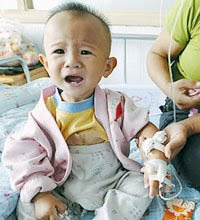
"More than 53,000 babies are suffer due to Milkpowder Devil"

"REASON FOR KIDNEY FAIL AND PROBLEMS WITHIN SRI LANKA"

BEIJING: The Chinese Health Ministry on Friday ordered a nationwide investigation of milk powder linked to a rash of kidney stones in infants and one death and said those responsible "will face serious punishment."

The announcement this week that infants were sickened by the milk powder revived worries about Chinese product safety after a spate of injuries and deaths blamed on tainted toothpaste and other goods.

Local officials were ordered to report all possible cases of illness in infants linked to the powder and to arrange emergency treatment, the ministry said in a statement.

"Those responsible will face serious punishment," said a ministry spokesman, Mao Qunan, quoted by the official Xinhua News Agency.

The major Chinese dairy that produced the formula has recalled 700 tons of the product and said it was contaminated with melamine, a chemical used in plastics, Xinhua and the official China Daily newspaper reported.

People who answered the phone at the dairy, Sanlu Group Co., said managers were not available to comment.

"The Health Ministry is still conducting a nationwide investigation of babies' illness due to this, and at the same time is urgently organizing exports to conduct research and treatment," the ministry statement said.

Another ministry statement instructed doctors in how to diagnose and treat the ailments.

In one province, Gansu in the northwest, doctors have reported a total of 59 cases of kidney stones in infants, compared with none in 2006 or 2007, the China Daily said. It said many of those babies were fed the Sanlu formula.

Fonterra, a New Zealand dairy cooperative that owns 43 percent of Sanlu, said it was advised the company had a "quality issue in its products as a result of receiving defective milk in China."

The company "has advised us that they have recalled product in China and have put new milk quality testing procedures in place," Fonterra said in an e-mail message to The Associated Press. The statement gave no details of the recall, but China Daily said it involved 700 tons of milk powder.

According to Xinhua, Sanlu said the contaminated powder was produced before Aug. 6.

Authorities launched an investigation this week after 14 babies who drank the formula developed kidney stones and one died, state media reported.

The case adds to a string of safety incidents in China over tainted toothpaste, toys, seafood and other products that have been blamed for deaths and injuries.

Melamine is the chemical involved in a massive pet food recall last year. It is not supposed to be added to any food ingredients, but suppliers in China sometimes mix it into food to make it appear to be high in protein. Melamine is nitrogen rich, and standard tests for protein in bulk food ingredients measure levels of nitrogen.

In Washington, the U.S. Food and Drug Administration warned consumers to avoid infant formula from China. Authorities said Chinese formula was not legally approved for importation into the United States but might be sold at ethnic grocery stores.

"We're concerned that there may be some infant formula that may have gotten into the United States illegally and may be on the ethnic market," said Janice Oliver, deputy director of the FDA's food safety program.

Sanlu, based in Shijiazhuang, southwest of Beijing, is the biggest Chinese producer of milk powder, with 18 percent of the market, according to government data. The company says it produces 6,800 tons of milk per day.

In 2004, more than 200 Chinese infants suffered malnutrition and at least 12 died after being fed phony formula that contained no nutrients. Some 40 companies were found to be making phony formula and 47 people were arrested.

Tuesday, July 22, 2008

What is Actigen-E?

How food industry mislead customers

Adding salt to pepper to sell pepper….
Actigen-E to Nestomalt
N.W.A.N.Y Wijesekara

We want both salt and pepper. You are marketing pepper. Customers buy pepper because it is pepper. You try to be smart. You add salt to pepper and ask people to buy your pepper because it is salt-added. People do buy salt-added pepper (of course at a higher price) because they feel that you have presented something special. But few actually realize that they wanted to buy only pepper, they already had salt in the stores. This is not very different from how the food industry plays on their customers.

Nestomalt had been a Malted Food Drink which has been marketed for decades in Sri Lanka. It has been marketed by Nestle. Since recently Nestomalt is claimed to have a new compound named Actigen-E.

What is Actigen-E?
“Actigen-E? This should be a marvelous compound with some miraculous property.” This is probably the first impression that an average human being may feel about Actigen-E when they hear about it. This is exactly what the food industry wants the customers to feel and unfortunately that is not the reality about Actigen-E at last.

This is the industry’s claim about Actigen-

E: Nestomalt contains Actigen-E, a combination of 8 vitamins and 4 minerals with enriched levels of Vitamin B, Vitain C and Calcium to help optimize the conditions for the release of energey from Carbohydrate, Protein, and Fat in your food. 2 cups of Nestomalt(56g) will fullfil 1/3 of your Recommended Dietary Allowance of vitamin B1, B2, B3, B6 aand B 12. (Source: Nestomalt Package)


It is not a miraculous compound yet, a mixture of already existing vitamins and minerals that are found in a healthy diet. We did a Pubmed search for Actigen-E and did not find a single article containing it. Nor it is found in any of the standard text books on Nutrition.

Actigen-E, who owns it?
The Brand Owner for Actigen-E is SOCIETE DES PRODUITS NESTLE S.A. Nestomalt is claimed to be the only compound which has Actigen-E. Obviously only their product can contain Actigen-E as there are no competitors! The fact is that another company can make a cocktail of vitamins and minerals and call it “Fastigen-E” for example and own the brand and claim that their product only contains Fastigen-E.

Confusing the customers…
This is a well known strategy of the food industry: take advantage over the confused customers. The customer is thinking about the Vitamins and minerals and how they release energy etc. They are masked of the negative effects of this sugary high calorie food item which will not favor a healthy life style. The minor details have blurred the large picture. The mission completed! Product hits targets. Alas health!

Thursday, November 8, 2007

Wednesday, November 7, 2007

Sunday, October 28, 2007

Saturday, October 27, 2007

THIS ALL FOR PROFESSIONAL TO RE THINKING ABOUT OUR NATION

{ RE THINKING ABOUT OUR NATION }

Milk Powder should stop. Otherwise answer bellow Q.

1. Study why parents frequently go to doctor with kids for cough and Allergic conditions.

2. Why kids having Diabetes about 20% of Kids bellow age 14 ?

3. Study reason for 20,140,000 teeth problems age up to year 14

4. Why people having Diabetes up to 1/4 among total population of the country ? (around 50,00,000 )

5. Why all most all Elders having Arthritis ? ? (40 Malians from USA)

6. Why people having Blood Pressure and Cancer ????

7. Study Latest treat due to MAD COW DISEASE. Do you want to be Alzheimer's friend??

8. Study why people having Kidney failure problems?


Drink Water Early Morning for Healthy Life


Do not addict to Milk powder any more!!!

Friday, October 26, 2007

“Mad Cow Disease” and Human Health

Frequently Asked Questions About “Mad Cow Disease” and Human Health

"Mad Cow Disease" cause to bring you Alzheimer's Disease

This is a reminder that Alzheimer's disease affects real people, real families. My dad isn't a monster. He's just a man whose brain is slowly being eaten by a terrible disease.

What is Mad Cow Disease?

Mad Cow Disease or bovine spongiform encephalopathy (BSE) is a brain disease of cattle first identified in the United Kingdom (UK) in the mid 1980s. BSE is part of a group of diseases known as transmissible spongiform encephalopathies (TSEs). All of these diseases are characterized by distinctive changes in the brain, abnormal behavior and death.

What causes Mad Cow Disease (BSE)?
It is thought that this disease is caused and spread by an abnormal form of a protein called a "prion". The abnormal protein triggers a chain-reaction causing other proteins in the brain to change to the abnormal form. Eventually these abnormal proteins accumulate in the brain leading to the development of abnormal behavior and eventually death.

How do cattle get Mad Cow Disease (BSE)?
When cattle are slaughtered, portions of the animal not destined for human consumption may be used to produce a protein-rich byproduct that may be mixed with grain and fed back to livestock as feed. In the UK where the disease was first identified, it is thought that these byproducts may have contained the prion protein, and that cattle became infected by consuming feed containing prion-contaminated animal protein. It is for this reason that the feeding of animal proteins derived from cattle back to cattle has been banned in the US.

Are there other animal Transmissible Spongiform Encephalopathies (TSEs)?
Yes. There are other TSE diseases in animals and humans. Scrapie, one such prion-related disease, is a TSE that has been occurring in sheep and goats for at least 400 years. Despite close contact between people and sheep and goats, and the importance of lamb and mutton in many diets, there has been no evidence of human disease due to scrapie.

Chronic wasting disease (CWD) of deer and elk (cervids) is another TSE disease that has occurred in wild cervids in the Rocky Mountain states for many years and has recently been identified in Wisconsin. There are also TSEs in minks, cats and other animals.

Are there TSEs which occur in humans?

Yes. There are a number of TSE diseases which occur in humans. One of the human diseases in this group is classic Creutzfeldt-Jakob disease (CJD). In the classic form of CJD, a chance (sporadic) mutation of normal brain protein into an abnormal protein occurs, which then leads to the formation of more abnormal protein.

CJD-like illness can also be familial, occurring in families where a genetic mutation favors the initial development of the abnormal protein. Also, there are cases of CJD that have followed transplantation of prion-infected cornea (eye) and other tissues, or the administration of hormones produced from human glands. More recently variant CJD (vCJD) has been identified. Variant CJD is a TSE disease in humans linked to eating meat products from cattle infected with Mad Cow Disease (BSE).

What are the symptoms of Creutzfeldt-Jacob Disease (CJD)?
Classic CJD is a human disease characterized by progressive dementia, leading to death. The disease may start with confusion or mental symptoms. Other symptoms are difficulty moving and muscle jerks. More and more signs and symptoms of brain damage and movement disorder follow until the patient goes into a coma and dies. Most of the cases of classic CJD have been diagnosed in people between the ages of 55 and 75.

How long does it take to develop classic CJD?
Evidence suggests that it might take between 10 to 40 years to get sick with classic CJD once abnormal proteins have begun to develop. Classic CJD almost always occurs in people over 50 years old. Once someone gets classic CJD, they may live for 6 to 12 months.

How common is classic CJD?
Because classic CJD is caused by the chance, sporadic mutation of a normal brain protein into the prion, the risk of classic CJD is the same all over the world, about one per million persons per year. Studies conducted by the Department of Public Health have identified that 5-10 cases of classic CJD occurred in Massachusetts’s residents each year between 1992 and 2000.

What is variant-CJD (vCJD)?
Variant CJD is a disease in humans that has been linked to ingesting meat infected with the prion that causes mad cow disease (BSE). Variant CJD tends to occur in younger people (average age 29 rather than 65 for classic CJD) and has slightly different symptoms than classic CJD. People with vCJD tend to live slightly longer than people with classic CJD.

Variant CJD was first recognized in the UK in the mid-1990s, over ten years after the beginning of the BSE outbreak in cattle. Because of this and other similarities, vCJD is believed to be the result of consumption of prion-contaminated meat products. Muscle meat itself does not contain prions, but in processing of ground beef, sausage and other meat products, contamination of the product with nervous tissues containing the infective prion may occur.

How common is vCJD, the human disease related to ingesting meat products infected with Mad Cow Disease (BSE)?
The risk of vCJD is thought to be related to exposure to animal products contaminated with the prion that causes BSE in cattle. Nearly all the cases of vCJD in humans have been in the UK or have been in people with exposure to cattle meat products from the UK.

There have been 153 cases of vCJD reported in the world since the first case was identified in 1995, with 143 of these in the UK. Although many millions of people in the UK and around the world have been exposed to UK beef, and approximately 200,000 cases of BSE in cattle were reported and removed from the food supply over the past twenty years, the number of cases of vCJD remains low.

How do people get vCJD?
It is thought that a very small percentage of people who eat meat products infected with the BSE agent will get vCJD. Experiments done with cattle and other animals suggest that almost all of the infectivity is in tissue from the cattle’s brain, spinal cord, and intestine, and that muscle meat itself is not infectious. Milk products from cattle are also not associated with any risk of infection with BSE.

How have BSE and vCJD been controlled in the United Kingdom?
After mad cow disease (BSE) was recognized, millions of cattle were killed and disposed of. The feeding of animal source protein back to cattle was banned. Because of these changes, the number of BSE cases in cattle each year in the UK has been decreasing since 1992. The number of vCJD cases in humans each year in the UK has been decreasing since 2000.

Statistics on mad cow disease (BSE) in cattle are available at: http://www.oie.int/eng/info/en_esb.htm.

Statistics on vCJD in the UK, the human disease thought related to eating meat contaminated with brain or spinal tissue of cows infected with BSE, are available at: http://www.cjd.ed.ac.uk/figures.htm.

What is being done in the United States to prevent BSE and vCJD?
The United States introduced a number of safeguards and surveillance efforts to lower the chances of BSE getting into the U.S. These included bans on use of certain animal proteins in animal feed, bans on UK beef products, and testing programs to quickly identify BSE in US cattle. The US plan can be obtained at: http://www.aphis.usda.gov/lpa/issues/bse/bsesum.pdf. Over 57,000 cattle brains have been tested for BSE in the United States.

The first cow positive for BSE in the United States was found in December 2003 in Washington State. This animal was imported from Canada. Because the cow was born in Canada before it was illegal to feed animal protein back to cattle, the cow may have been exposed to the prion agent through eating contaminated animal feed.

What has been done in Massachusetts?
State agencies, particularly the Massachusetts Department of Agricultural Resources (MDAR), work closely with the U.S. Department of Agriculture and federal health agencies to assure the safety of the food supply. Bans on imports of beef and cattle from countries with BSE positive cows have been in place for some time. Bans on imports of deer have been also in place because of BSE-like disease in deer and elk, called chronic wasting disease (CWD).

The Massachusetts Department of Public Health has been monitoring all CJD cases in Massachusetts since 1992. This surveillance includes intensified follow-up of any cases in people under 50 years old. Thus far, we have seen cases of CJD as expected (approximately one per million per year), with no evidence of vCJD. Massachusetts is one of a few states where CJD is a reportable condition.

Where can I get more information?
The following web sites can provide a great deal of more information on BSE, CJD, vCJD and related diseases:

Thursday, October 25, 2007

higher rates of hip fractures are in Europe and in South Pacific (Australia and New Zealand)


Misconceptions:

Osteoporosis and BMD

by D. P. Atukorale

If you didn't have bones you would just be a shapeless blob on the floor. You might have learned about human skeleton from the popular song "that the ankle bone is connected to knee bone..." etc you might have been taught by your parents, teachers and doctors to drink milk to build strong bones and teeth.

You must have watched a lot of television advertisements (TV ads) and ads in newspapers and journals giving you all the beneficial effects of various brands of malted milk and (cow's) milk powder and how these various brands of malted milk and cow's milk containing varying amounts of calcium prevent osteoporosis.

Americans consume more cow's milk and its products than most populatations in the world. So Americans must have wonderful strong bones. Unfortunately this is not so. A recent study showed that American women aged 50 and older have one of the highest rates of hip fractures in the world.

The only countries with higher rates of hip fractures are in Europe and in South Pacific (Australia and New Zealand) where they consume even more milk than the U.S.

An excess rate of hip fractures often used as a reliable indicator of osteoporosis, a bone disease which especially affects women after menopause and this is claimed to be due to inadequate intake of calcium.

Dairy products are particularly rich in calcium, so that dairy industry eagerly supports efforts to boost calcium consumption. This is why you see so many TV ads about various brands of milk powder and malted milk. As mentioned earlier these countries that use the most cow's milk and its products also have the highest fracture rates and worst bone health.

One possible explanation is found in a report showing an impressively strong association between intake of animal protein and bone fracture rate for women in different countries.

Authored in 1993 by researchers at Yale University School of Medicine, the report summarized data on protein intake and fracture rates taken from 34 separate surveys in 16 countries that were published in 29 peer - reviewed publications. All the subjects in these surveys were women 50 years and older and it is noteworthy that 70 percent of the fracture rate was attributable to consumption of animal protein.

These researchers explained that animal protein unlike plant protein increased the acid load in the body. The body does not like this acidic environment and begins to fight it. In order to neutralize the acid, the body uses calcium which acts as a very effective base.

This calcium must come from somewhere and it ends up being pulled from bones and the calcium loss weakens the bone, putting them at greater risk for fracture.

There had been evidence for well over 100 years that animal protein decreases bone health. In 1880 it was first suggested that animal protein causes metabolic acid load and this was documented as long as 1920 and other studies showed that consumption of animal protein is more effective than plant protein at increasing metabolic acid load in the body.

When animal protein increases metabolic acid and draws calcium from bones, amount of calcium in urine is increased and average American intake of protein is 70-100g/day. The observation on the association between animal protein consumption and bone fracture rate is very impressive.

A study published in 2000, comes from the department of Medicine, at the University of California at St. Francisco. Using 87 surveys in 33 countries it compared the ratio vegetable to animal protein consumption to the rate of bone fracture. A high ratio of vegetable to animal protein consumption was found to be impressively associated with virtual disappearance of bone fractures.

The study of Osteoporotic Research Group at University of California at San Francisco, involving 1,000 women aged 65 and up shows that after 7 years of observation, the women with the highest ratio of animal protein to vegetable protein had 3.7 times more bone fractures than women with the lowest ratio.

In rural China study where animal protein to plant protein ratio was about 10 percent, the fracture rate is one fifth that of the U.S. In Nigeria, the animal to plant protein ratio is only about 10 percent that of Germany and the hip fracture rate is lower by over 99 percent.

Do widely advertised claims that protein-rich dairy products protect our bones? Everyday we watch TV ads showing advantages of taking certain brands of milk powder containing calcium to get strong bones and to prevent osteoporosis.

It would be very interesting for one of our orthopaedic surgeons or a rheumatologist to compare the incidence of hip fractures among rural post menopausal women (who consume less animal proteins than the urban women) with urban post menopausal women who consume more animal proteins and takes calcium tablets regularly.

Prof. Mark Hegsted (long time Harvard Professor) believes that excessive high intake of calcium consumed over a long time impairs the body's ability to control how much calcium it uses and when.

Under healthy conditions the body uses an activated form of vitamin D, "calcitirol" to adjust how much calcium it absorbs from food and how much it excretes and distributes in the bones. Calcitriol is considered a hormone. It seems perfectly plausible that animal protein and even calcium when consumed at excessive levels are capable of increasing the risk of osteoporosis.

But dairy industry still suggests that we should consume more of its products and spends hundreds of thousands of rupees to advertise their products with a view to built strong bones and teeth. Huge amounts of money are at stake as well.

One of the most cited osteoporosis experts, one funded by dairy industry angrily wrote in a prominent editorial, that the diet favouring a diet with higher ratio of plant-to-animal protein cited above could have been influenced to some extent by 'currents' in the larger society (The currents he was referring were animal rights activitists opposed to the use of dairy foods).

Bone Mineral Density (BMD)

BMD is a measure of bone density that is often used to diagnose bone health. If BMD falls below a certain level you may be at risk of osteoporosis i.e., if your BMD is low, you are at a risk for fracture.

Much better predictor of osteoporosis is dietary ratio of animal-to-plant protein the higher the ratio higher the risk of disease. BMD appears as it is associated with the ratio. Duke University researchers recently found an association between a high dietary intake of calcium and vitamin D and brain lesion volume in elderly men and women.

The researchers believe that the problem may be due to the effects of calcification and bone like formations in blood vessels Vit. D. enhances calcium absorption. Current dietary calcium and Vitamin D recommended for adult over 50 years of age are 1,200 mg and 400 to 600 i.u. respectively and recent findings suggest that these recommendations may be too high for general population.

The WHO acknowledges that less dietary calcium is needed when animal protein consumption is low.

Risk of osteoporosis

1) Stay physically active. Take the stairs instead of the lift; Brisk walking daily for about one hour or jogging, cycling or swimming or doing yoga are useful measurers.

2) Eat a variety of whole plants foods, avoid animal foods; calcium is available in plenty in plant foods such as "Niwithi", legumes such as beans and leafy vegetables. Stay away from refined carbohydrates like sugary cereals, candies, plain pastas and white breads.

3) Keep your salt intake to a minimum. Avoid highly processed and packaged foods which contain excess salt.

4) Don't be deceived by misleading TV ads about milk foods which the dairy industry claims to prevent osteoporosis.