Tuesday, July 22, 2008

What is Actigen-E?

How food industry mislead customers

Adding salt to pepper to sell pepper….
Actigen-E to Nestomalt
N.W.A.N.Y Wijesekara

We want both salt and pepper. You are marketing pepper. Customers buy pepper because it is pepper. You try to be smart. You add salt to pepper and ask people to buy your pepper because it is salt-added. People do buy salt-added pepper (of course at a higher price) because they feel that you have presented something special. But few actually realize that they wanted to buy only pepper, they already had salt in the stores. This is not very different from how the food industry plays on their customers.

Nestomalt had been a Malted Food Drink which has been marketed for decades in Sri Lanka. It has been marketed by Nestle. Since recently Nestomalt is claimed to have a new compound named Actigen-E.

What is Actigen-E?
“Actigen-E? This should be a marvelous compound with some miraculous property.” This is probably the first impression that an average human being may feel about Actigen-E when they hear about it. This is exactly what the food industry wants the customers to feel and unfortunately that is not the reality about Actigen-E at last.

This is the industry’s claim about Actigen-

E: Nestomalt contains Actigen-E, a combination of 8 vitamins and 4 minerals with enriched levels of Vitamin B, Vitain C and Calcium to help optimize the conditions for the release of energey from Carbohydrate, Protein, and Fat in your food. 2 cups of Nestomalt(56g) will fullfil 1/3 of your Recommended Dietary Allowance of vitamin B1, B2, B3, B6 aand B 12. (Source: Nestomalt Package)

It is not a miraculous compound yet, a mixture of already existing vitamins and minerals that are found in a healthy diet. We did a Pubmed search for Actigen-E and did not find a single article containing it. Nor it is found in any of the standard text books on Nutrition.

Actigen-E, who owns it?
The Brand Owner for Actigen-E is SOCIETE DES PRODUITS NESTLE S.A. Nestomalt is claimed to be the only compound which has Actigen-E. Obviously only their product can contain Actigen-E as there are no competitors! The fact is that another company can make a cocktail of vitamins and minerals and call it “Fastigen-E” for example and own the brand and claim that their product only contains Fastigen-E.

Confusing the customers…
This is a well known strategy of the food industry: take advantage over the confused customers. The customer is thinking about the Vitamins and minerals and how they release energy etc. They are masked of the negative effects of this sugary high calorie food item which will not favor a healthy life style. The minor details have blurred the large picture. The mission completed! Product hits targets. Alas health!

Thursday, November 8, 2007

Wednesday, November 7, 2007

Sunday, October 28, 2007

Saturday, October 27, 2007

THIS ALL FOR PROFESSIONAL TO RE THINKING ABOUT OUR NATION

{ RE THINKING ABOUT OUR NATION }

Milk Powder should stop. Otherwise answer bellow Q.

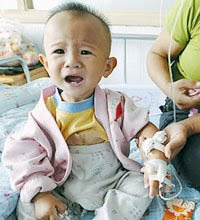
1. Study why parents frequently go to doctor with kids for cough and Allergic conditions.

2. Why kids having Diabetes about 20% of Kids bellow age 14 ?

3. Study reason for 20,140,000 teeth problems age up to year 14

4. Why people having Diabetes up to 1/4 among total population of the country ? (around 50,00,000 )

5. Why all most all Elders having Arthritis ? ? (40 Malians from USA)

6. Why people having Blood Pressure and Cancer ????

7. Study Latest treat due to MAD COW DISEASE. Do you want to be Alzheimer's friend??

8. Study why people having Kidney failure problems?


Drink Water Early Morning for Healthy Life


Do not addict to Milk powder any more!!!

Friday, October 26, 2007

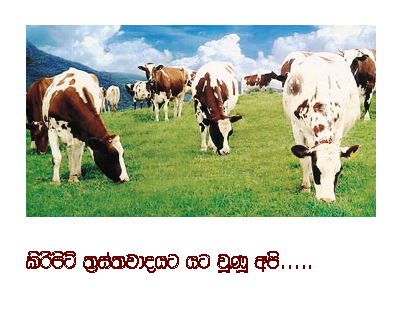
“Mad Cow Disease” and Human Health

Frequently Asked Questions About “Mad Cow Disease” and Human Health

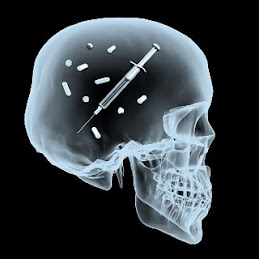
"Mad Cow Disease" cause to bring you Alzheimer's Disease

This is a reminder that Alzheimer's disease affects real people, real families. My dad isn't a monster. He's just a man whose brain is slowly being eaten by a terrible disease.

What is Mad Cow Disease?

Mad Cow Disease or bovine spongiform encephalopathy (BSE) is a brain disease of cattle first identified in the United Kingdom (UK) in the mid 1980s. BSE is part of a group of diseases known as transmissible spongiform encephalopathies (TSEs). All of these diseases are characterized by distinctive changes in the brain, abnormal behavior and death.

What causes Mad Cow Disease (BSE)?
It is thought that this disease is caused and spread by an abnormal form of a protein called a "prion". The abnormal protein triggers a chain-reaction causing other proteins in the brain to change to the abnormal form. Eventually these abnormal proteins accumulate in the brain leading to the development of abnormal behavior and eventually death.

How do cattle get Mad Cow Disease (BSE)?
When cattle are slaughtered, portions of the animal not destined for human consumption may be used to produce a protein-rich byproduct that may be mixed with grain and fed back to livestock as feed. In the UK where the disease was first identified, it is thought that these byproducts may have contained the prion protein, and that cattle became infected by consuming feed containing prion-contaminated animal protein. It is for this reason that the feeding of animal proteins derived from cattle back to cattle has been banned in the US.

Are there other animal Transmissible Spongiform Encephalopathies (TSEs)?
Yes. There are other TSE diseases in animals and humans. Scrapie, one such prion-related disease, is a TSE that has been occurring in sheep and goats for at least 400 years. Despite close contact between people and sheep and goats, and the importance of lamb and mutton in many diets, there has been no evidence of human disease due to scrapie.

Chronic wasting disease (CWD) of deer and elk (cervids) is another TSE disease that has occurred in wild cervids in the Rocky Mountain states for many years and has recently been identified in Wisconsin. There are also TSEs in minks, cats and other animals.

Are there TSEs which occur in humans?

Yes. There are a number of TSE diseases which occur in humans. One of the human diseases in this group is classic Creutzfeldt-Jakob disease (CJD). In the classic form of CJD, a chance (sporadic) mutation of normal brain protein into an abnormal protein occurs, which then leads to the formation of more abnormal protein.

CJD-like illness can also be familial, occurring in families where a genetic mutation favors the initial development of the abnormal protein. Also, there are cases of CJD that have followed transplantation of prion-infected cornea (eye) and other tissues, or the administration of hormones produced from human glands. More recently variant CJD (vCJD) has been identified. Variant CJD is a TSE disease in humans linked to eating meat products from cattle infected with Mad Cow Disease (BSE).

What are the symptoms of Creutzfeldt-Jacob Disease (CJD)?
Classic CJD is a human disease characterized by progressive dementia, leading to death. The disease may start with confusion or mental symptoms. Other symptoms are difficulty moving and muscle jerks. More and more signs and symptoms of brain damage and movement disorder follow until the patient goes into a coma and dies. Most of the cases of classic CJD have been diagnosed in people between the ages of 55 and 75.

How long does it take to develop classic CJD?
Evidence suggests that it might take between 10 to 40 years to get sick with classic CJD once abnormal proteins have begun to develop. Classic CJD almost always occurs in people over 50 years old. Once someone gets classic CJD, they may live for 6 to 12 months.

How common is classic CJD?
Because classic CJD is caused by the chance, sporadic mutation of a normal brain protein into the prion, the risk of classic CJD is the same all over the world, about one per million persons per year. Studies conducted by the Department of Public Health have identified that 5-10 cases of classic CJD occurred in Massachusetts’s residents each year between 1992 and 2000.

What is variant-CJD (vCJD)?
Variant CJD is a disease in humans that has been linked to ingesting meat infected with the prion that causes mad cow disease (BSE). Variant CJD tends to occur in younger people (average age 29 rather than 65 for classic CJD) and has slightly different symptoms than classic CJD. People with vCJD tend to live slightly longer than people with classic CJD.

Variant CJD was first recognized in the UK in the mid-1990s, over ten years after the beginning of the BSE outbreak in cattle. Because of this and other similarities, vCJD is believed to be the result of consumption of prion-contaminated meat products. Muscle meat itself does not contain prions, but in processing of ground beef, sausage and other meat products, contamination of the product with nervous tissues containing the infective prion may occur.

How common is vCJD, the human disease related to ingesting meat products infected with Mad Cow Disease (BSE)?
The risk of vCJD is thought to be related to exposure to animal products contaminated with the prion that causes BSE in cattle. Nearly all the cases of vCJD in humans have been in the UK or have been in people with exposure to cattle meat products from the UK.

There have been 153 cases of vCJD reported in the world since the first case was identified in 1995, with 143 of these in the UK. Although many millions of people in the UK and around the world have been exposed to UK beef, and approximately 200,000 cases of BSE in cattle were reported and removed from the food supply over the past twenty years, the number of cases of vCJD remains low.

How do people get vCJD?
It is thought that a very small percentage of people who eat meat products infected with the BSE agent will get vCJD. Experiments done with cattle and other animals suggest that almost all of the infectivity is in tissue from the cattle’s brain, spinal cord, and intestine, and that muscle meat itself is not infectious. Milk products from cattle are also not associated with any risk of infection with BSE.

How have BSE and vCJD been controlled in the United Kingdom?
After mad cow disease (BSE) was recognized, millions of cattle were killed and disposed of. The feeding of animal source protein back to cattle was banned. Because of these changes, the number of BSE cases in cattle each year in the UK has been decreasing since 1992. The number of vCJD cases in humans each year in the UK has been decreasing since 2000.

Statistics on mad cow disease (BSE) in cattle are available at: http://www.oie.int/eng/info/en_esb.htm.

Statistics on vCJD in the UK, the human disease thought related to eating meat contaminated with brain or spinal tissue of cows infected with BSE, are available at: http://www.cjd.ed.ac.uk/figures.htm.

What is being done in the United States to prevent BSE and vCJD?
The United States introduced a number of safeguards and surveillance efforts to lower the chances of BSE getting into the U.S. These included bans on use of certain animal proteins in animal feed, bans on UK beef products, and testing programs to quickly identify BSE in US cattle. The US plan can be obtained at: http://www.aphis.usda.gov/lpa/issues/bse/bsesum.pdf. Over 57,000 cattle brains have been tested for BSE in the United States.

The first cow positive for BSE in the United States was found in December 2003 in Washington State. This animal was imported from Canada. Because the cow was born in Canada before it was illegal to feed animal protein back to cattle, the cow may have been exposed to the prion agent through eating contaminated animal feed.

What has been done in Massachusetts?
State agencies, particularly the Massachusetts Department of Agricultural Resources (MDAR), work closely with the U.S. Department of Agriculture and federal health agencies to assure the safety of the food supply. Bans on imports of beef and cattle from countries with BSE positive cows have been in place for some time. Bans on imports of deer have been also in place because of BSE-like disease in deer and elk, called chronic wasting disease (CWD).

The Massachusetts Department of Public Health has been monitoring all CJD cases in Massachusetts since 1992. This surveillance includes intensified follow-up of any cases in people under 50 years old. Thus far, we have seen cases of CJD as expected (approximately one per million per year), with no evidence of vCJD. Massachusetts is one of a few states where CJD is a reportable condition.

Where can I get more information?
The following web sites can provide a great deal of more information on BSE, CJD, vCJD and related diseases: